
From Sandstone Peaks to Waterfalls: Zhangjiajie and Guizhou

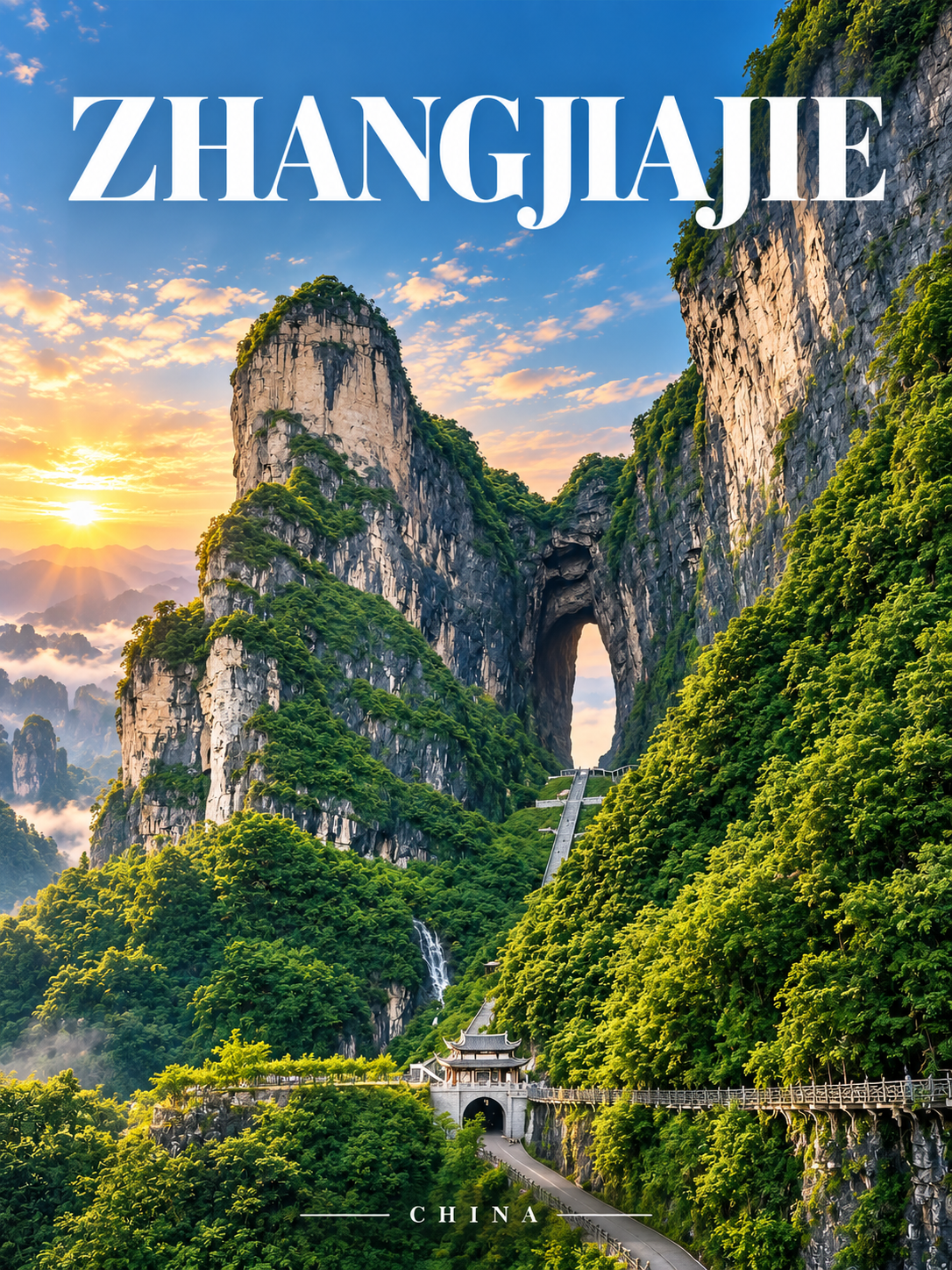
Mountain scenery can take very different forms. Around Zhangjiajie, tall sandstone pillars rise above wooded valleys. In Guizhou, caves, pools and waterfalls reveal landscapes shaped by water. These destination selections share an interest in nature, while each has its own geography and character.
Zhangjiajie: height, depth and changing perspectives
Zhangjiajie National Forest Park is defined by quartz sandstone pillars, forested slopes and deep valleys. The scenery around Yuanjiajie emphasises the height of the rock formations, while Golden Whip Stream introduces the valley landscape below them.
Ten-Mile Gallery follows another valley in the Suoxiyu scenic area, with peaks lining both sides. Named formations such as the Old Man Gathering Herbs and Three Sisters Peak draw attention to individual silhouettes within the wider mountain setting.
Water offers a contrasting perspective. Baofeng Lake lies among green peaks in Wulingyuan, where reflections bring slopes and open water into the same view. Huanglong Cave leads into a different environment of underground rivers, waterfalls and spacious chambers. At Zhangjiajie Grand Canyon, steep cliffs and the Yuntiandu glass bridge emphasise the depth of the gorge.
Guiyang: wooded hills, karst and stonework
Guiyang’s own selection brings nature close to the city. Qianling Mountain Park combines wooded hills, lakes and temple grounds, including Hongfu Temple. Tianhetan presents karst scenery through a mix of caves, pools, waterfalls and natural bridges.
Nanjiang Grand Canyon adds riverside cliffs, waterfall formations and elevated wooden walkways. Huaxi Yelang Valley approaches the landscape through art: Song Peilun’s large stone faces and sculptural columns draw on Nuo and Tunpu cultural traditions within a karst valley.
Across Guizhou: water and settlement
The wider Guizhou grouping extends beyond Guiyang. Libo Xiaoqikong is in Libo County, Qiannan, where a historic seven-arch bridge gives its name to a landscape of forests, pools and cascading water. Wolong Pond and stepped waterfalls are among its characteristic waterscapes.
Huangguoshu Waterfall is in Anshun. Its broad curtain of water and the cave behind it present another expression of the region’s water-shaped scenery. Xijiang Qianhu Miao Village, in Leishan County, Qiandongnan, adds a cultural landscape of hillside stilted houses and traditions associated with singing, silverwork and embroidery.
Understand the regional groupings
The Hunan selection also reaches beyond Zhangjiajie city. Fenghuang Ancient Town is in Fenghuang County, and Furong Town is in Yongshun County, both in Xiangxi. Their riverside buildings and waterfall setting add architectural perspectives to the region. Changsha’s Wuyi Square belongs to a separate urban setting. These are regional highlights, each with its own location, rather than neighbouring sights within one city.