
Eight Destinations, Eight Ways to Explore China

Choosing a destination begins with the details that hold your attention. A palace courtyard, a riverfront skyline and a forested valley tell different stories about China. These eight destination selections offer several starting points, from historic capitals to city neighbourhoods and landscapes shaped by water and stone.
Beijing and Xi’an: history in the landscape
Beijing brings imperial architecture into focus. The Forbidden City follows a grand central axis, while the Temple of Heaven expresses the ceremonial traditions of the Ming and Qing dynasties. The Summer Palace adds lakes and gardens, and Shichahai connects historic residences with hutong life.
Xi’an presents another set of historical perspectives. The pottery warriors and horses at Emperor Qinshihuang’s Mausoleum Site Museum reveal the scale of an imperial burial complex. The city wall, Bell and Drum Towers and Giant Wild Goose Pagoda place architectural history within the city’s streets and skyline.
Shanghai, Chongqing and Guangzhou: three urban viewpoints
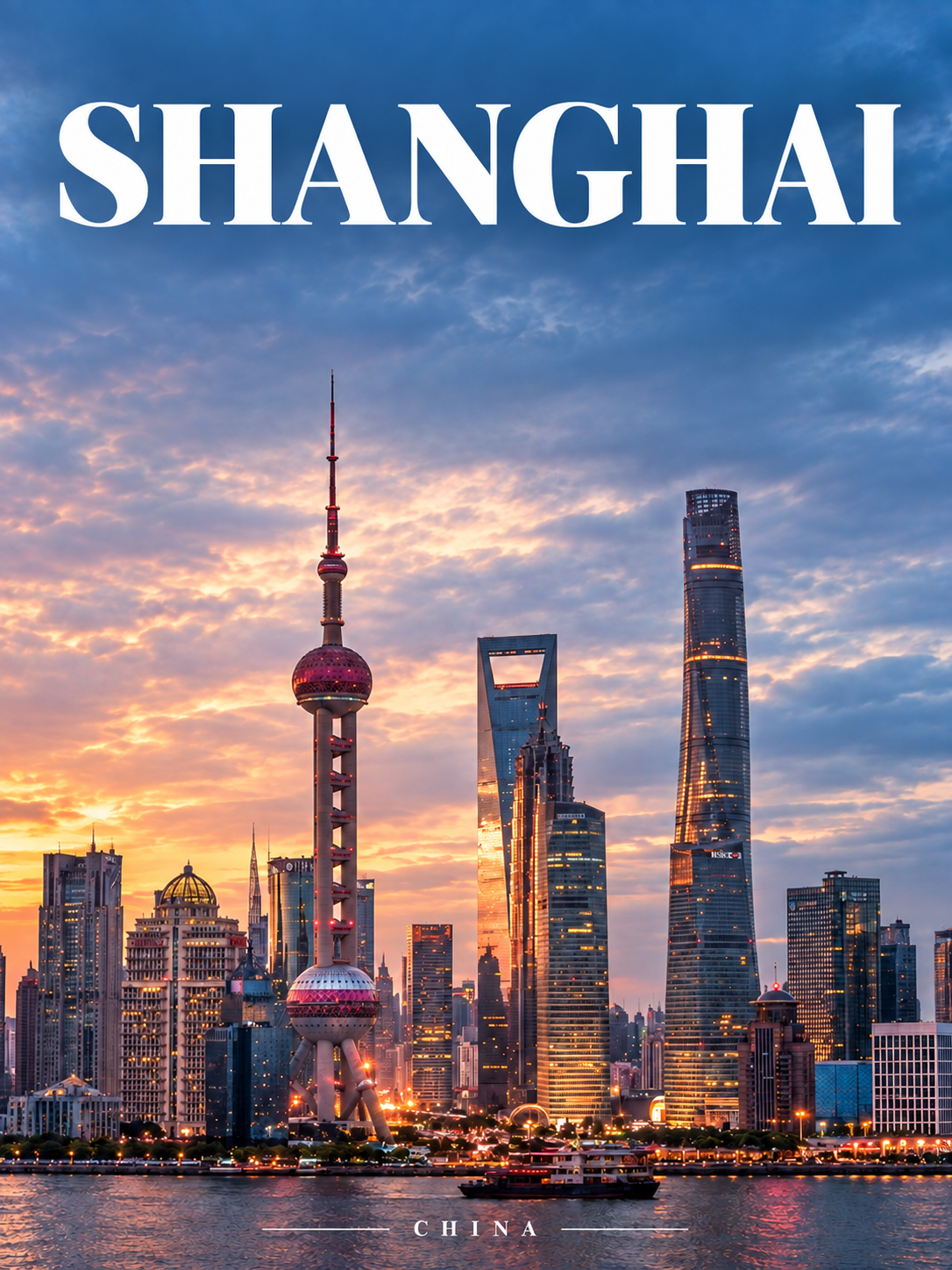
Shanghai’s contrasts are visible across the Huangpu River: historic façades along the Bund face the towers of Lujiazui. Yu Garden and Wukang Road introduce smaller architectural details, while Zhujiajiao adds the bridges and waterside lanes of a traditional town in Qingpu District.
In Chongqing, the hillside setting shapes the experience. Hongya Cave’s layered buildings, the monorail at Liziba and the Mountain City Walkway reveal different relationships between architecture and terrain. River views connect these scenes with the city’s bridges and skyline.
Guangzhou combines Lingnan craftsmanship with a varied urban heritage. Carved decoration at the Chen Clan Ancestral Hall contrasts with the European-style façades of Shamian Island. Yongqing Fang preserves connections with Cantonese cultural traditions, while Guangzhou Tower represents the modern skyline.
Chengdu: neighbourhood culture and conservation
Chengdu’s selection brings together the Panda Base, the courtyard streets of Kuanzhai Alley and the Three Kingdoms history associated with Wuhou Shrine. Jinli adds lanterns, food and crafts. Dujiangyan broadens the picture with an ancient system of water management linked to the Chengdu Plain.
Zhangjiajie and Guiyang: look beyond the city label
Zhangjiajie is a starting point for sandstone pillars, deep valleys, Baofeng Lake and Huanglong Cave. Guiyang’s selection includes wooded Qianling Mountain Park, the karst scenery of Tianhetan and the stone sculptures of Huaxi Yelang Valley.
Some highlights belong to a wider region. Fenghuang, Furong Town and Changsha are separate places within the Hunan grouping. Libo Xiaoqikong, Xijiang Qianhu Miao Village and Huangguoshu Waterfall belong to the broader Guizhou selection beyond Guiyang. Reading these as regional groupings keeps their different settings clear.